Understanding the Satellite Operations Language Metamodel (SOLM) 1.1: Standardizing Spacecraft Operations
satellite-operations · solm · omg-standard · spacepython · ccl
What Is SOLM (Satellite Operations Language Metamodel)?
solm · ground-systems · standards
Historically, exchanging spacecraft operation procedures between satellite manufacturers (integrators) and ground station operators has been a fragmented process — proprietary scripting languages, non-standardized flowcharts, text manuals. Published by the Object Management Group (OMG), SOLM 1.1 addresses this interoperability problem by defining a Platform Independent Model (PIM) for spacecraft operational procedures.
With SOLM, procedures written for command transmission, telemetry verification, and ground system configuration can be transferred across different ground systems, or executed directly, without vendor lock-in.
Architecture: the M2 Metamodel Layer
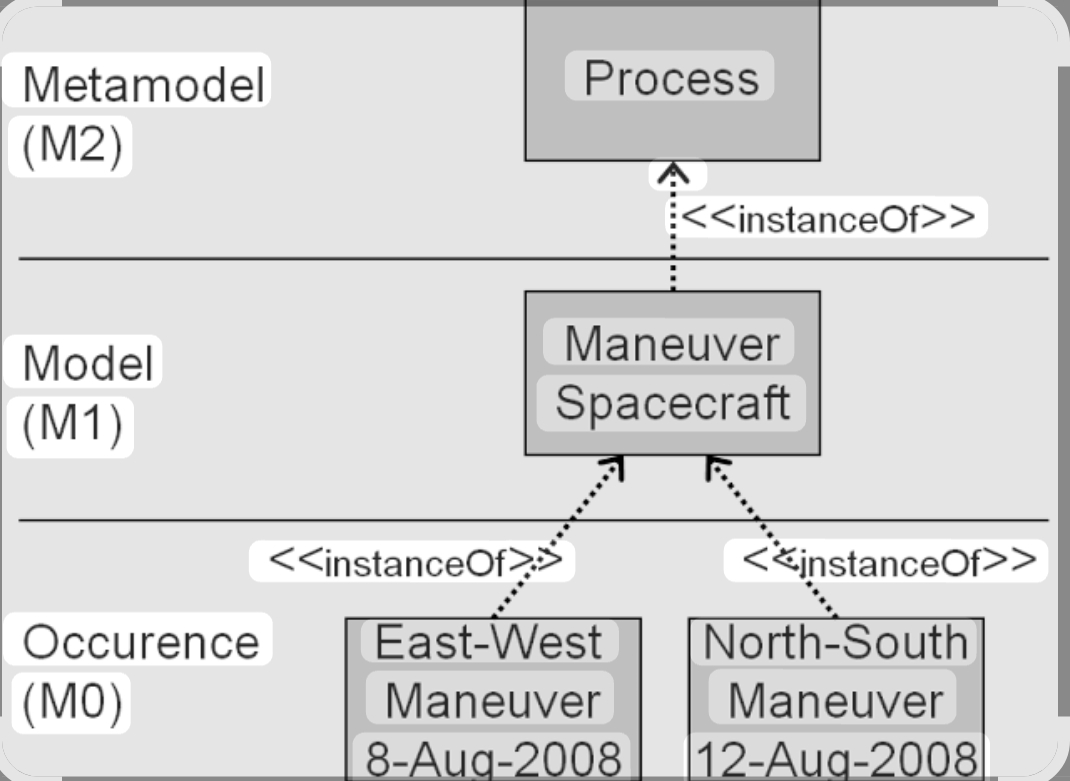
SOLM functions as an M2 metamodel layer within the standard Model-Driven Architecture (MDA) framework:
- M2 Layer (SOLM Metamodel) — defines the core language rules, structures, and semantic elements (Commands, Parameters, Activities, etc.)
- M1 Layer (PIM Models) — the actual operational procedures designed for a specific spacecraft
- M0 Layer (Execution/Runtime) — the execution instance of a procedure, populated with real-time parameter values and timestamps
The Five Core Packages
1. Procedure Invocation — procedure definitions and invocation structures
ModeledProcedure: procedures represented through structured UML activity modelsNativeProcedure: procedures written directly in the ground system's native scripting languageProcedureArgument: input/output arguments passed to procedures
2. Activities — execution control logic and activity flows
ControlFlow&ObjectFlow: direct the execution sequence and data pass-throughDecisionNode,MergeNode,ForkNode,JoinNode: conditional logic, branching, and multi-threaded parallel execution
3. Parameters — spacecraft and ground system parameters
XtceParameter: telemetry and command definitions aligned with the XTCE standardGemsParameter&GroundParameter: ground equipment parameter referencesTime,SpecificTime,TimeInterval: time representation for scheduled delays and execution intervals
4. Command Transmission — command and directive delivery
Command&CommandArgument: telecommands sent directly to the spacecraftDirective: instructions issued to ground station hardware or support equipment
5. Procedure Actions — atomic operations performed within procedure steps
Send: transmits commands or directivesVerify,VerifyExpression,VerifyRange: validates telemetry values against expected boundsWait,WaitOnTime,WaitOnExpression: pauses execution until specific conditions or time intervals are met
Conformance Levels
Ground systems implementing SOLM can claim compliance across three levels:
| Level | Required features & capabilities |
|---|---|
| Level 1 | Conditionals, loops, timed waits, XTCE object support, NativeProcedure invocations, exception handling |
| Level 2 | Everything in Level 1, plus GEMS equipment parameters and directives |
| Level 3 | Everything in Level 2, plus parallel execution threads within a procedure |
Mapping SOLM to Execution Languages: a SpacePython Example
SOLM models captured in XMI format can be mapped bi-directionally to Domain Specific Languages (DSLs) such as SpacePython and Comet Control Language (CCL). Here's a SOLM-compliant procedure in SpacePython:
# SOLM-compliant SpacePython Procedure Sample

from solm.actions import send, verify, wait_on_time
from solm.parameters import XtceParameter

def execute_power_on_sequence():
    # 1. Read solar panel voltage telemetry
    panel_voltage = XtceParameter("SOLAR_PANEL_VOLTAGE").read()

    # 2. Verify range before powering on payload
    if panel_voltage > 28.0:
        # Send command to spacecraft
        send("PAYLOAD_POWER_ON", argument={"MODE": "SAFE"})

        # Wait 5 seconds for telemetry update
        wait_on_time(seconds=5)

        # Verify status
        verify("PAYLOAD_STATUS_PARAM", expected_value="ON")
    else:
        raise Exception("Insufficient voltage to power on payload!")
Why it matters
The SOLM 1.1 specification is a foundation for modernizing satellite ground segment operations. By decoupling procedure logic from proprietary execution engines, space agencies and private operators can maintain, re-use, and validate operational scripts throughout the entire spacecraft lifecycle.